
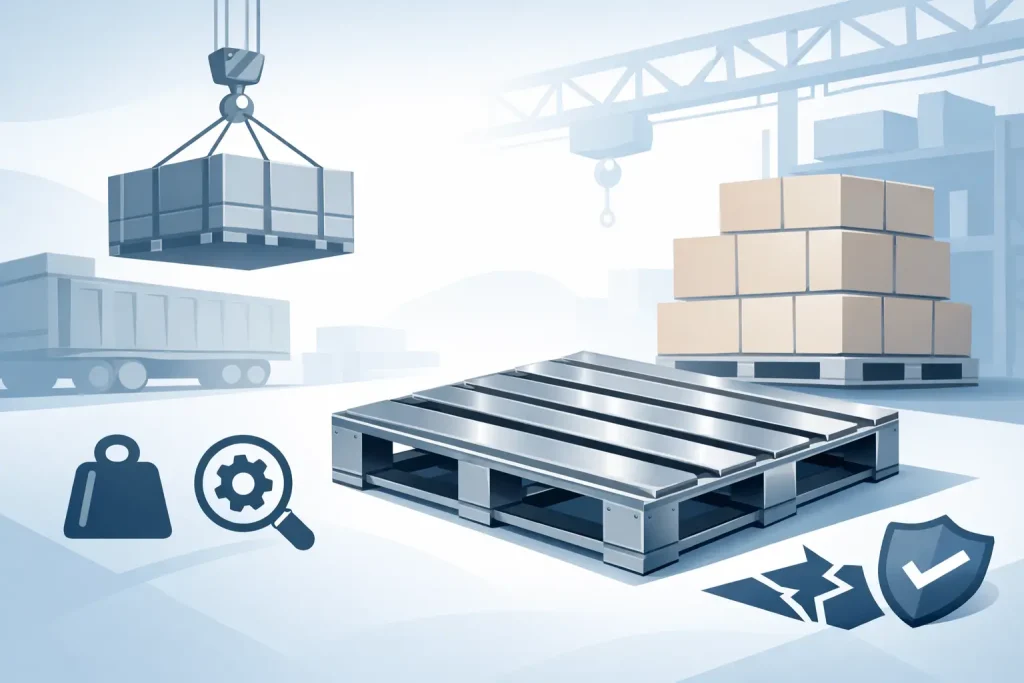
A pallet that bends under weight does more than damage stock – it slows loading, creates handling risk, and adds avoidable replacement cost. If you are sourcing a steel pallet for heavy loads, the real question is not just how much it can hold on paper. You need to know how it performs in actual warehouse traffic, forklift handling, racking, outdoor exposure, and repeated industrial use.
For buyers in manufacturing, logistics, workshops, and heavy-duty storage environments, steel pallets are usually chosen for one reason: they solve problems that timber and standard plastic pallets cannot. That said, not every steel pallet is built for the same load profile. A unit made for static floor storage may not be suitable for rack loading or frequent movement by pallet truck. Getting that distinction wrong can turn a good purchase into an expensive operational issue.
Why a steel pallet for heavy loads is often the better choice
Steel pallets are built for strength, repeat use, and better resistance to impact. In operations where pallets carry drums, machinery parts, dense materials, bagged chemicals, metal components, or stacked industrial goods, higher structural integrity matters. A steel pallet is less likely to crack under concentrated weight, split from repeated forklift contact, or degrade in wet and dirty environments.
That matters even more where the load is not evenly distributed. Many heavy products create pressure points. A pallet may be rated for a total weight, but if most of that weight sits in two or three contact areas, weaker materials can fail early. Steel handles this condition better when the design includes proper deck support, reinforcement, and weld quality.
There is also a safety and housekeeping advantage. Unlike wood, steel does not shed splinters. Unlike lower-grade plastic, it is less likely to deform under high temperatures or prolonged heavy stacking. For sites that already prioritize containment, spill response, and safe material handling, a more durable pallet often fits the same operating logic – fewer failures, fewer interruptions, and better control.
Load rating is not just one number
Many buyers ask for load capacity first, which is reasonable. But one published rating rarely tells the full story. A pallet can have a static load rating, a dynamic load rating, and a rack load rating, and those numbers may be very different.
Static load refers to weight supported while the pallet is resting on the floor and not moving. Dynamic load applies when the pallet is lifted or transported by forklift or pallet truck. Rack load refers to the pallet being supported on beams in racking, which places much higher stress on the structure. If your operation stores heavy goods on racks, this detail matters immediately.
A steel pallet for heavy loads should be selected based on the heaviest real use case, not the easiest one. If your pallet spends most of its life on warehouse racks, asking only for static load capacity is not enough. The same applies if loads are moved often, stacked, or handled in rough conditions. Procurement teams that compare pallets by one headline capacity number can miss meaningful differences in safety margin.
What design details actually affect performance
From a distance, many steel pallets look similar. In use, the small design details are what separate a suitable pallet from one that creates recurring problems.
The first detail is deck construction. A fully decked steel pallet offers better support for smaller cartons, bags, and irregular items. An open or slatted design can reduce weight and cost, but it may not suit every product type. If you are moving drums, rigid containers, or parts in bins, a different deck format may still work well. The point is to match the pallet deck to the load footprint.
The second detail is entry design. A 2-way pallet may be acceptable for controlled storage, but a 4-way entry pallet gives more flexibility for forklift access and movement in tighter warehouse layouts. In busy operations, easier handling reduces damage and saves time.
The third detail is reinforcement. Heavy-duty steel pallets should be assessed for support channels, base frame strength, and overall structural rigidity. This is particularly important for long-span loads, point-loaded equipment, and rack storage. A pallet can be made from steel and still be underbuilt for your application.
Finish also matters more than many buyers expect. Powder-coated or galvanized options can help with corrosion resistance, especially in humid, washdown, marine, chemical, or semi-outdoor conditions. If pallets will be exposed to moisture, chemical splash, or frequent cleaning, surface protection should be part of the buying decision, not an afterthought.
Where steel pallets make the most sense
Steel pallets are usually not the cheapest upfront option, so they should be used where their strengths pay back clearly. The strongest fit is in operations where pallet failure carries a high cost.
That includes warehouses storing dense inventory, manufacturing lines handling heavy parts, workshops moving equipment, and industrial plants where pallets are exposed to oil, dirt, heat, or repeated forklift contact. They are also a practical choice for export-controlled environments, closed-loop internal logistics, and sites that want a longer service life from each pallet.
For chemical and spill-control environments, steel pallets can also fit well when paired with the broader goal of safer handling and cleaner storage. Buyers already investing in containment pallets, absorbents, and hazard response equipment typically understand the value of using durable handling equipment around high-risk materials.
Still, steel is not automatically the right answer everywhere. If loads are light, one-way shipment is common, or manual movement is frequent, a lighter pallet material may be more practical. The right pallet is the one that suits the handling pattern, not just the strongest-looking option.
Common buying mistakes to avoid
One common mistake is buying based only on dimensions. A pallet may fit your floor space or racking footprint but still fail your handling requirements. Always check how the pallet will be lifted, where it will be stored, and whether the load sits evenly across the deck.
Another mistake is ignoring equipment compatibility. Forklift tine spacing, pallet jack entry height, rack beam setup, and stacking method all affect usability. A strong pallet that does not work smoothly with your equipment creates daily friction.
Some buyers also overlook pallet weight. Steel pallets are durable, but they are heavier than many alternatives. That can be fine in forklift-based environments, but it may be less ideal where manual positioning happens often. Heavier pallets can also affect transport costs, depending on how they are used.
The last mistake is choosing general-purpose steel pallets for highly specific applications. If you are storing drums, sharp-edged loads, machine components, or unstable goods, it is worth confirming whether a standard design is suitable. A lower price at purchase can lead to a shorter service life or higher handling risk later.
How to choose the right steel pallet for heavy loads
Start with the load itself. Check the actual product weight, footprint, center of gravity, and whether the weight is evenly spread or concentrated. Then review how the pallet will be used – floor storage, racking, transport, stacking, or frequent movement.
Next, match the pallet design to the environment. Indoor dry storage has different requirements from wet processing areas, outdoor yards, or chemical handling zones. Corrosion resistance, cleanability, and impact tolerance all change based on site conditions.
Then look at handling flow. If the pallet will move through forklifts, hand pallet trucks, and warehouse racks, you need a design that supports all three. It is better to resolve that before ordering than after the first delivery arrives on site.
Finally, buy from a supplier that can confirm practical specifications clearly. Industrial buyers do not need vague claims. You need stated dimensions, load ratings by condition, material details, and realistic lead time. That is how you avoid mismatch and keep purchasing efficient.
For businesses that need fast access to industrial storage and safety products, suppliers like FUMiKA are relevant because they serve the same operational priorities buyers care about – availability, practical specifications, and cost-conscious purchasing without unnecessary complexity.
The real value is fewer failures on the floor
A steel pallet is not just a storage base. In the right application, it is part of safer material handling, smoother warehouse movement, and better long-term cost control. When heavy goods are involved, durability is not a luxury feature. It is part of preventing damage, reducing risk, and keeping operations moving without avoidable downtime.
If you are reviewing pallet options for dense inventory or demanding industrial use, focus less on the cheapest unit price and more on how the pallet will perform after months of lifting, stacking, and exposure. The right steel pallet keeps doing its job long after a weaker option has already become a problem.