
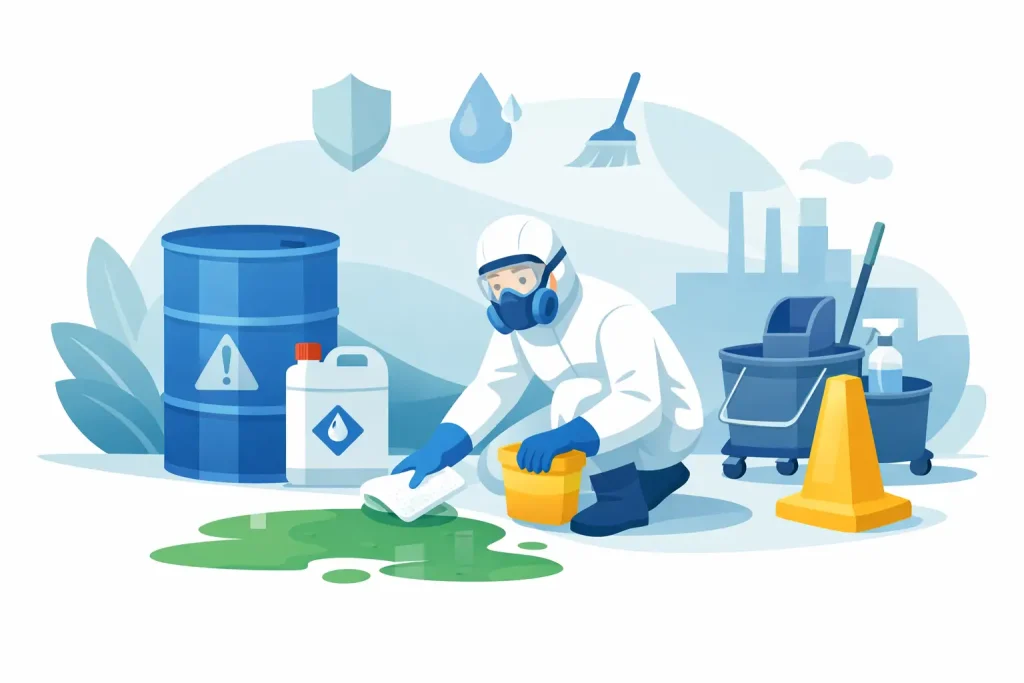
A chemical spill does not give your team extra time to think. It spreads, creates exposure risk, interrupts operations, and can turn a small leak into a reportable incident if the response is slow or incorrect. If you need to know how to clean chemical spills safely, the first priority is not mopping faster. It is identifying the hazard, protecting people, and using the right spill-control equipment for the substance involved.
How to clean chemical spills without making them worse
The biggest mistake in spill response is treating every liquid the same. Water-based cleaner on a warehouse floor is one thing. Acid, solvent, corrosive liquid, or unknown chemical is another. The response depends on the product spilled, the volume, the surface, ventilation, and whether the liquid is flammable, reactive, toxic, or corrosive.
That is why a proper spill procedure starts with isolation, not cleanup. Keep untrained staff away from the area. If the spill is giving off fumes, causing eye or skin irritation, or involves an unknown substance, escalate immediately according to your site emergency plan. Small spills that are within your team’s training and equipment capacity can usually be handled in-house. Large, highly hazardous, or uncontrolled releases should not.
Before anyone touches the spill, confirm what has spilled by checking the label, container, and safety data sheet. If the source container is damaged but can be safely uprighted or closed, stop the leak first. That one action often reduces cleanup time more than anything else.
Start with hazard assessment and PPE
Anyone involved in cleanup should wear the correct personal protective equipment for the chemical. At minimum, that often includes chemical-resistant gloves, splash goggles, and protective clothing. In some cases, a face shield, apron, boots, or respirator may also be required. The trade-off is simple: under-protection creates exposure risk, but overcomplicating PPE can delay response if workers are not trained to use it properly. Your PPE selection should match the chemical hazard, not guesswork.
Next, assess the spill area. Is the liquid moving toward a drain, doorway, loading area, or sensitive equipment? Is it on concrete, epoxy flooring, metal decking, or soil? A spill on a smooth warehouse floor is easier to contain than one running across uneven ground or into a drainage channel. That is why spill response equipment should be staged where spills are likely, not stored in one far corner of the facility.
Contain first, absorb second
Once the area is secured and PPE is on, the next step is containment. This is where many teams lose control of the situation. They reach for absorbent pads immediately, but if the spill is still spreading, you are cleaning and chasing at the same time.
Use absorbent socks or booms to form a barrier around the outer edge of the spill. If the liquid is heading toward a drain, protect that point first. If the spill source is still dripping, place absorbents around the leak point and, if safe, use containment under the damaged container. Spill containment pallets are especially useful where drums, pails, and chemical containers are stored, because prevention costs less than emergency response.
Only after the spill is contained should you start absorbing the pooled liquid. For chemical spills, use absorbents that are rated for aggressive or hazardous liquids. General-purpose absorbents may not be suitable for corrosives or reactive substances. Oil-only products are also the wrong choice for many chemical incidents. Matching the absorbent to the liquid matters.
How to clean chemical spills step by step
For routine workplace incidents that trained staff are authorized to handle, the cleanup process is usually straightforward.
First, isolate the area and prevent foot traffic, forklift movement, or ignition sources from getting close. Second, identify the chemical and review the handling precautions. Third, put on the required PPE. Fourth, stop the source if it is safe to do so. Fifth, contain the spill with absorbent socks, barriers, or drain protection. Sixth, place absorbent pads or pillows over the liquid until it is fully taken up. Seventh, collect all contaminated absorbent, debris, and disposable PPE into the proper waste container for hazardous disposal if required.
After the bulk liquid is removed, decontaminate the surface according to the chemical’s cleanup guidance. Sometimes that means a compatible neutralizer. Sometimes it means a water rinse. Sometimes water should not be used at all. This is where the safety data sheet is critical. A corrosive acid and a solvent do not get the same final cleaning treatment.
The last step is inspection. Check the area for residue, slippery film, vapor risk, and any hidden migration under pallets, shelving, or machinery. Reopen the area only when it is safe for normal operations.
Choosing the right spill kit matters
A spill kit is only useful if it matches the environment. Small maintenance rooms and labs may only need a compact 20L kit for quick response. Workshops, loading areas, and medium-risk production spaces often need 60L or 120L capacity. Larger industrial sites, chemical storage zones, transport yards, and warehouse operations may be better served by 240L spill kits with more absorbents and stronger response capacity.
Size is one part of the decision. Absorbent type is the other. Chemical spill kits are designed for hazardous liquids and are typically the right choice where acids, alkalis, coolants, solvents, or mixed chemicals may be present. Oil spill kits are intended for hydrocarbons and oil-based liquids, especially where water rejection matters. If your site handles both, relying on one generic kit can create gaps.
Industrial buyers usually know this already from experience: the cheapest kit on paper is not always the cheapest when downtime, waste, and replacement stock are considered. A properly stocked kit placed close to the hazard saves labor and reduces spread.
Common mistakes during chemical spill cleanup
One common error is using water too early. Some chemicals react with water, spread faster when diluted, or create contaminated runoff that is harder to control. Another is sending untrained staff to deal with a spill because it looks small. Volume alone does not define risk. A small amount of the wrong chemical can still cause serious injury.
Another frequent problem is poor stock planning. Facilities buy one spill kit for compliance, place it in a distant storeroom, and assume they are covered. In practice, response equipment should be positioned near drum storage, chemical transfer points, loading zones, battery charging areas, labs, and maintenance stations.
Disposal is another point where sites get exposed. Used pads, socks, and PPE may still be hazardous after cleanup. Throwing them into regular trash without classification can create a second compliance problem. Waste handling should follow site procedure and local regulatory requirements.
When emergency equipment is part of the response
Some chemical spills involve splash risk to workers. When that happens, emergency showers and eyewash stations are not optional support equipment. They are part of the immediate response. If a worker gets chemical exposure on the skin or in the eyes, decontamination comes before spill recovery.
That is why sites that store or transfer hazardous liquids should think beyond absorbents alone. Spill kits, containment pallets, eyewash stations, and emergency showers work together. One controls the release. The others protect people.
Build a spill response setup that fits your site
There is no single answer for every facility. A warehouse handling packaged chemicals has different risks from a lab, workshop, clinic, or marine operation. The right setup depends on what you store, how often liquids are moved, what volumes are present, and how quickly trained staff can respond.
For many operations, the most practical approach is simple: place the correct chemical spill kit at the hazard point, keep absorbent pads and socks replenished, use containment pallets under storage where leaks are possible, and make sure emergency wash equipment is accessible. Buyers who treat spill response as a stocked operational need, not a once-a-year compliance purchase, usually get better control and less downtime.
FUMiKA supplies spill-control products for exactly this kind of fast, practical workplace response, from compact kits to larger-capacity options for industrial use.
If your team is reviewing how to clean chemical spills more effectively, do not stop at writing a procedure. Make sure the right kit size, absorbent type, and containment equipment are already on site before the next spill happens.